

Selong Belanak

Beginner Surfing in Selong Belanak: What to Know Before Your First Lesson

A first-timer’s guide to the beach, surf schools, lesson format, safety and choosing the right conditions.

The broad crescent of Selong Belanak Beach backed by green hills

Why beginners start here

A sandy bottom, friendly whitewater and plenty of local coaching

If you’ve never stood on a surfboard, Selong Belanak is a forgiving place to find out what all the fuss is about. On a suitable day, the main bay has a sandy bottom and manageable whitewater close to shore.

There are several schools along the beach, so arranging a lesson is easy. Choosing the right hour matters more than choosing the loudest sign: tide, wind, swell and crowds all change the experience.

You’ll spend part of the lesson on the sand, learn how to fall safely and probably swallow a little seawater. That’s normal. Standing up is a bonus; feeling comfortable with the board and the ocean is the real first step.


What happens in a first surf lesson?

Safety and technique begin on the sand

Wide white sand and turquoise water at Selong Belanak Beach in South Lombok

A useful first lesson starts with an explanation of the board, leash, stance, paddling, safe falling and how to protect your head when separated from the board. Students normally rehearse the pop-up on sand before entering shallow water. The instructor then helps position the board in whitewater and gives immediate feedback after each attempt.

Doyock Surf School currently describes its beginner lesson as a two-hour session covering safety, paddling and standing, with equipment included. Mul’s Surf School advertises private, semi-private, group and children’s lessons, with group size limited per instructor. Exact prices and durations can change, so compare what is included instead of relying on an old screenshot.

Standing on the first wave is enjoyable but not the only measure of a good lesson. Learning how to enter and exit safely, hold the board, read other people’s paths and fall without diving head-first are more important foundations.

How to choose a surf school

Prioritise instruction quality over the cheapest board

Biras Beach Bar beneath green hills on Tampah Beach

Selong Belanak has several verified options, including Aqia, Black Fin, Budi Warung, Doyock, Easy Surf, Mul’s, OlaOla and TUKTUKTIKI. The number of schools is useful, but visitors should still ask direct questions: how many students share one instructor, which language will be used, what equipment is included and how the school decides whether conditions are appropriate.

A private lesson offers the most feedback and can be worthwhile for nervous swimmers, older beginners or anyone who wants faster correction. A small group is more social and usually less expensive. Children need a programme designed for their age, water confidence and attention span rather than a reduced adult lesson.

Look at the equipment before entering the water. Beginners normally learn on a stable soft-top board. A correctly fitted leash and rash guard should be available, and damaged fins or exposed sharp surfaces are reasons to ask for another board.

What to bring and how to prepare

Small decisions make the session more comfortable

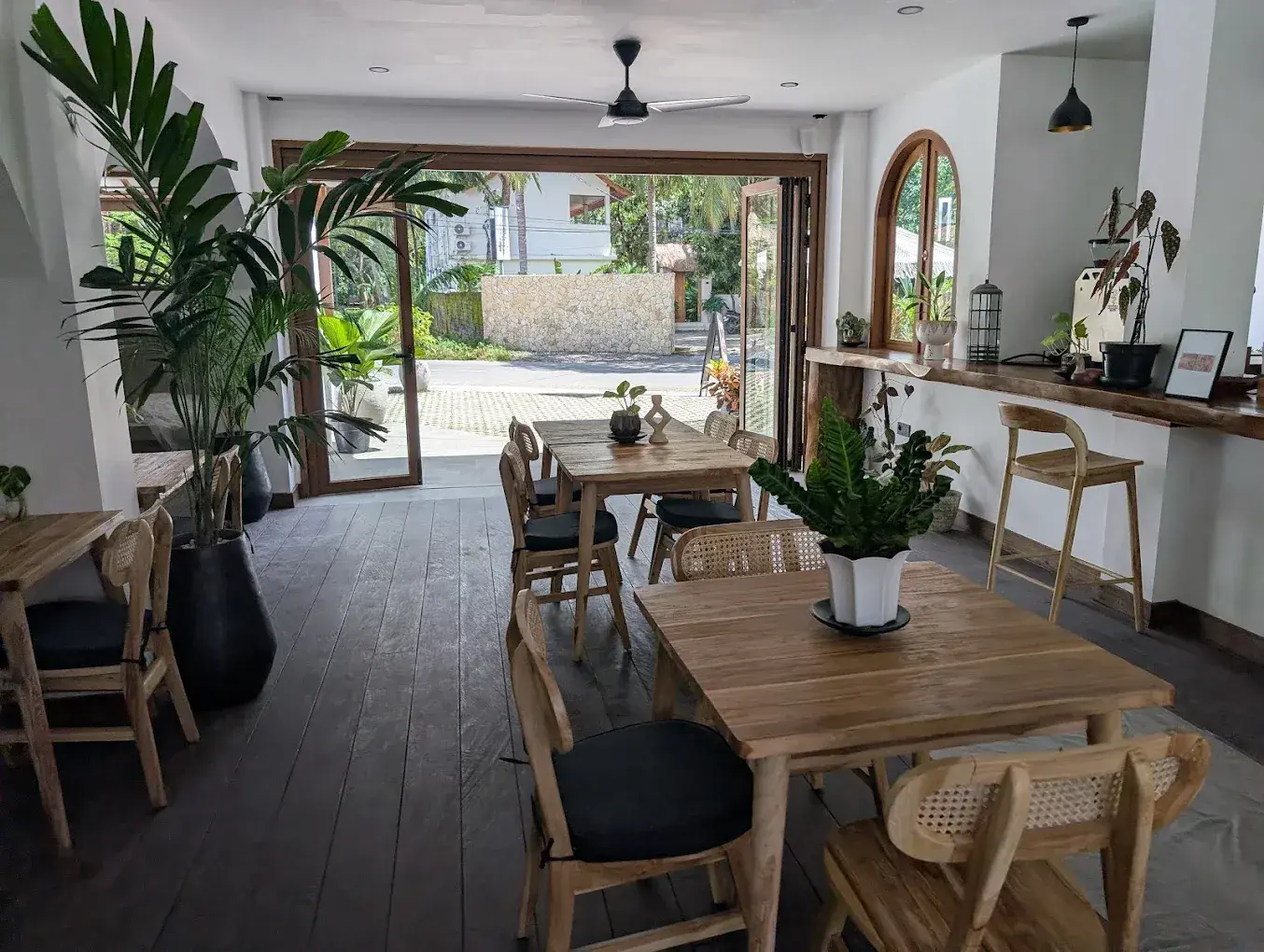
The timber interior and open frontage of Bareng Coffee Bar in Selong Belanak

Bring swimwear that stays secure, water, reef-safe sun protection, a towel and a dry change of clothes. Apply sunscreen early enough that it doesn't wash straight into your eyes or the sea. Remove jewellery and leave unnecessary valuables at your accommodation.

Eat something light beforehand and arrive hydrated, but avoid a large meal immediately before paddling. Coffee and breakfast are available in the village, while beachfront warungs make a simple post-session meal easy. Alcohol and surfing don't mix.

Tell the instructor honestly about swimming ability, injuries, medication and anxiety in open water. Surfing is physically demanding even in small waves, and an instructor can only adapt the lesson to information they know.

When to progress beyond whitewater

Control matters more than collecting surf spots

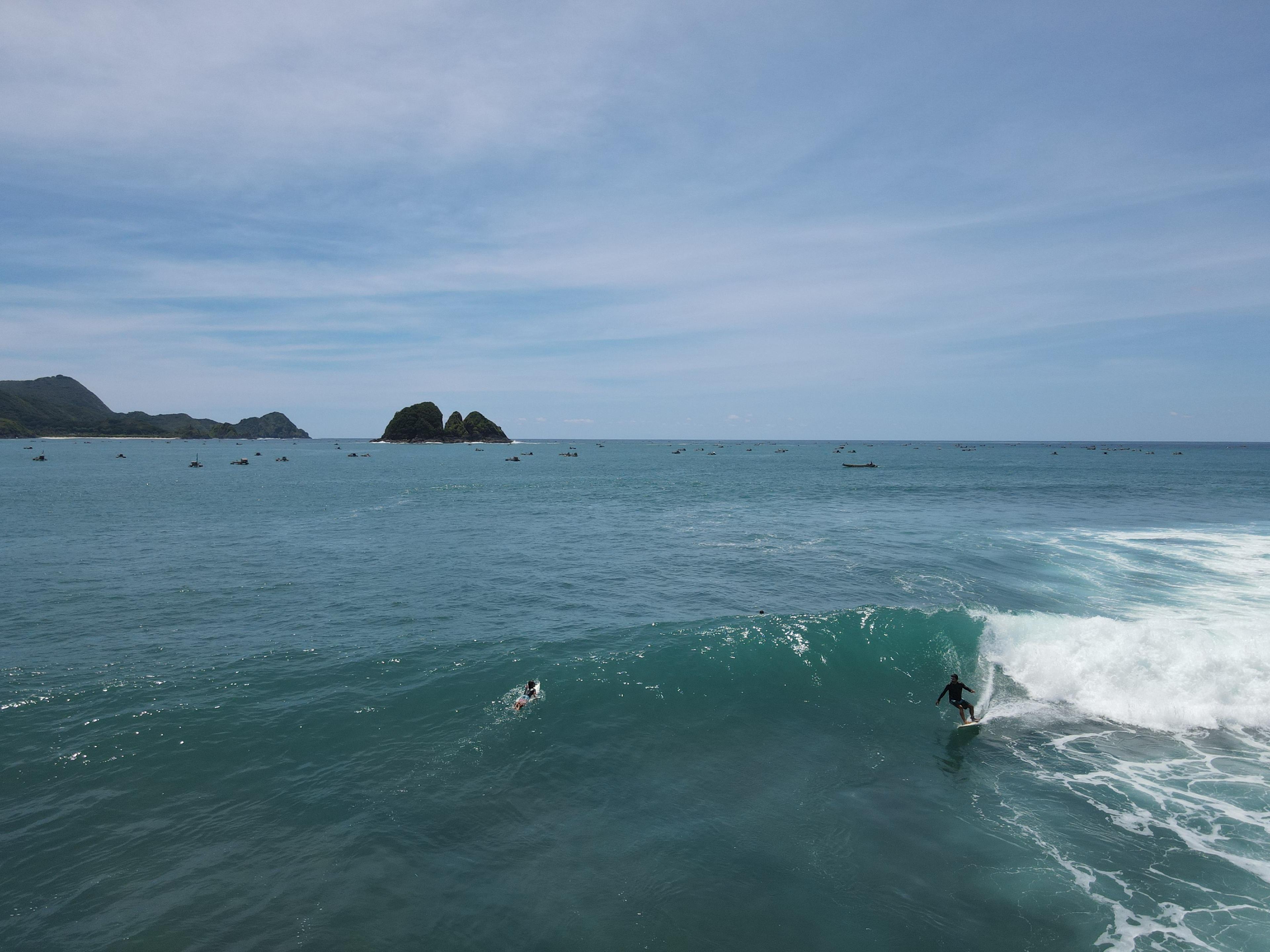
A clean right-hand reef wave at Serangan Beach near Selong Belanak

A beginner is ready to progress when they can paddle, pop up consistently, control the board, fall safely, understand priority and avoid other surfers. Catching an unbroken wave also requires reading the peak and turning, not merely standing in foam.

The next step may still be at Selong Belanak with an intermediate lesson. A local coach can select a cleaner part of the beach and introduce timing, trimming and turning. Travelling to a reef break isn't a badge of progress; it should happen only when ability and conditions align.

Experienced surfers use Serangan and Mawi for different seasonal conditions, but both demand greater awareness of reef, current, line-up etiquette and exit routes. Use a knowledgeable guide and don't paddle out based only on how manageable the wave looks from a distant viewpoint.

Before you book the lesson

Fast guidance before booking

Can a complete beginner learn here? Yes, suitable days on Selong Belanak’s main beach are used for first lessons. Do you need to be very fit? No, but basic swimming confidence and honest communication with the instructor are important.

Can children learn? Some local schools advertise dedicated children’s sessions. Ask about minimum age, instructor ratio and the conditions chosen that day. Can you simply rent a board? Rentals are available, but a lesson is safer and more productive for a true first-timer.

How many lessons are useful? One lesson can provide a first experience; several sessions give time to repeat safety, paddling and independent wave selection. Let recovery and conditions guide the schedule instead of booking every day before arrival.